

DVGW reference radiometer for UV drinking water disinfection
The Opsytec DVGW reference radiometer measures UVC irradiance in systems for UV drinking water disinfection and, as a reference radiometer, meets the requirements of DIN 19294-3:2020-08. It consists of the RMD radiometer and a reference sensor for 240 to 290 nm with a 160° aperture angle, which is inserted into a pressurized water-tight measuring window tube and can therefore be replaced simply and reproducibly.
The requirements for UV disinfection devices and their radiometers are laid down in the DIN 19294 series of standards. DIN 19294-1:2020-08 covers devices with UV low-pressure lamps including their device radiometers; DIN 19294-3:2020-08 defines the design, function and aperture angle of the corresponding reference radiometers. For devices for drinking water disinfection with UV medium-pressure lamps, DIN 19294-2:2026-04 and – for the reference radiometers – DIN 19294-4:2026-04 have applied since April 2026; DVGW worksheets W 294-2 and W 294-3 have been completely replaced. In Austria, ÖNORM M 5873-1:2020-01 applies to low-pressure and ÖNORM M 5873-2:2003-08 to medium-pressure systems.
The RMD as DVGW reference radiometer is one of the latest developments from Opsytec Dr. Gröbel GmbH. This easy-to-use radiometer incorporates more than 30 years of experience in all areas of irradiance measurement.
It is characterized by a wide dynamic range and extremely low noise.
For this purpose, the sensor already contains a multi-stage amplification, an extremely precise analog-to-digital converter and a temperature sensor. The memory contained in the sensor contains all sensor identifications and the calibration history.
The use of suitable materials ensures excellent corrosion resistance and long-term stability. Typical ageing is below 2 % per year. The sensors are factory calibrated or DAkkS calibrated to ISO/IEC 17025.

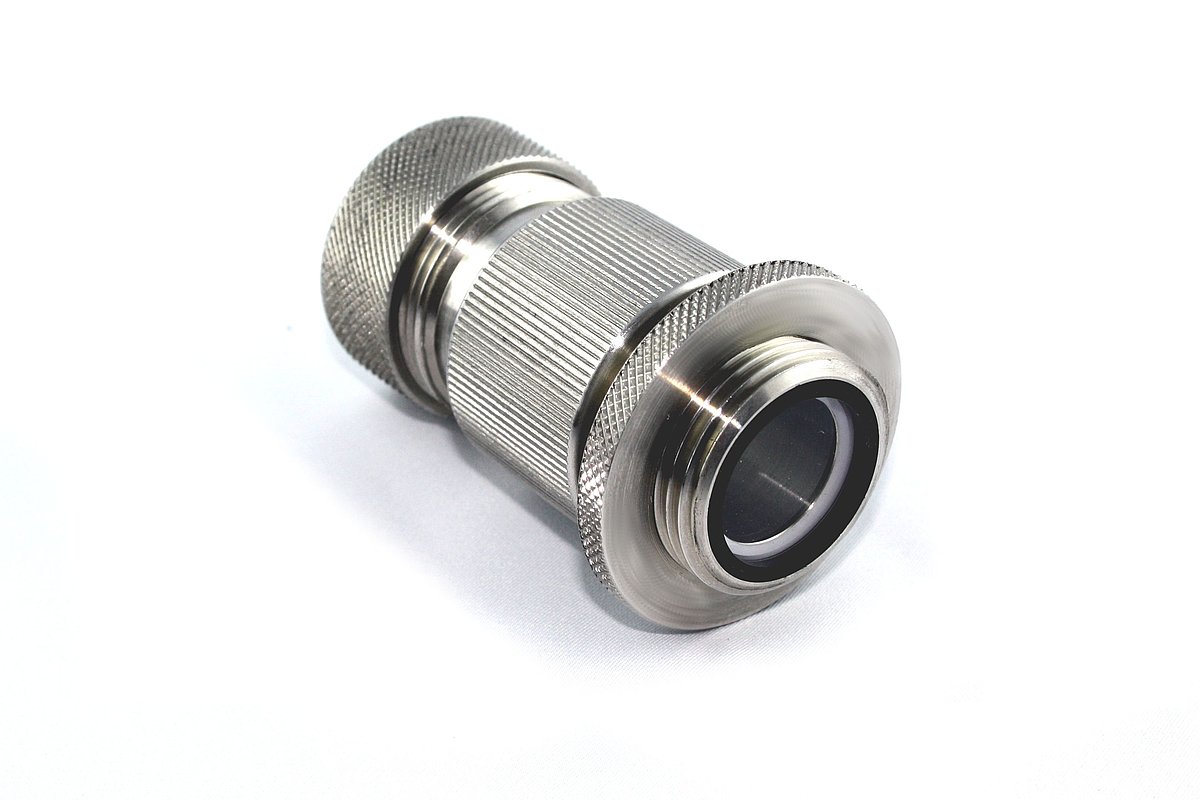

View the DVGW sensor as a 3D model
Look at the reference sensor from every side, rotate and zoom – directly in your browser.
The DVGW sensor can be viewed from all sides in the 3D product viewer – true to the original, generated from the CAD design data. Shape, window and connector can thus be examined in detail before procurement.
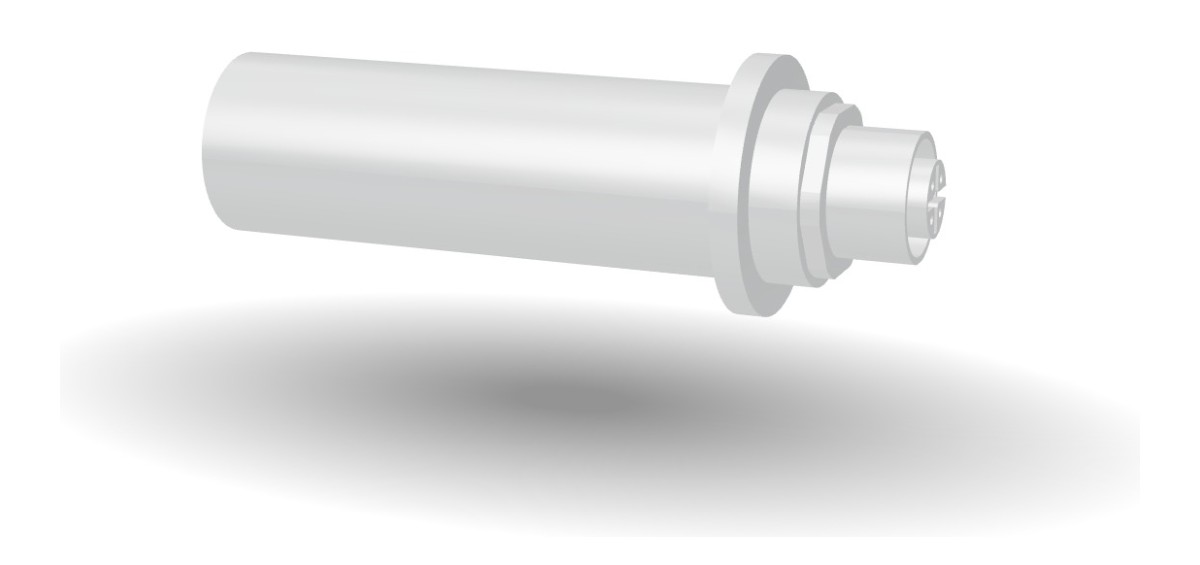
Technical data DVGW reference radiometer sensor
| Spectral range | 240 - 290 nm |
| Measurement range, typ. | 0 - 200 W/cm² |
| Resolution | 0,001 µW/cm² |
| Dynamic range | 1 : 10,000,000 |
| AD conversion | 24 bit |
| Temperature sensor | integrated |
| Opening angle | 160° |
| Dimensions | Ø 20 x 60 mm |
| Optical area | Ø 15 mm |
| Weight | 160 g |
| Connecting cable | 1,5 m |
| Operation temperature | 0 to 60 °C |
| Storage temperature | -20 to 60 °C |
| Humidity | < 80% non-condensing |
| Calibration uncertainty | 5-7% (k=2) |
| Linearity error | < 1% |
| Aging / year | < 2% |
Technical data RMD DVGW reference radiometer
| Sensor connectors | 2, fully digital |
| PC interface | USB 2.0 (only RMD PRO) |
| Display | graphical, illuminated |
| Display output | 1 + 2 channels |
| Irradiance + Dose | |
| Min/Max Irradiance | |
| Dimensions | 160 x 85 x 35 mm |
| Weight | 250 g |
| Power supply | Li-Ion battery, USB |
| 100 - 240 V, 50/60 Hz | |
| plug-in power supply | |
| Internal memory | 8 GB (only RMD PRO) |
| Sampling rate | adjustable: 1 s - 15 min |
| Recording time | > 2400 h |
| Operation temperature | 0 to 60 °C |
| Storage temperature | -20 to 60 °C |
| Humidity | < 80% non-condensing |
Background to the use of DVGW reference radiometers under DIN 19294-3 and DIN 19294-4
Lamps that generate UV radiation in the short-wave UVC spectral range are used for UV drinking water disinfection. Under Sections 19 and 20 of the German Drinking Water Ordinance (TrinkwV), in conjunction with the German Environment Agency's list of permissible treatment substances and disinfection processes, low-pressure and medium-pressure mercury lamps are currently approved for drinking water disinfection.
Low-pressure mercury lamps generate almost monochromatic radiation at 253.7 nm.
Due to their high output and high lamp pressure, mercury medium-pressure lamps generate a broad spectrum of UV radiation during operation, including UV-C radiation, which is required for the disinfection of water.
The DIN 19294-1:2020-08 standard not only specifies the requirements for devices with low-pressure mercury lamps for UV drinking water disinfection and their DVGW sensors for UV drinking water disinfection systems, but also defines precise specifications for their calibration.
In Germany, devices with medium-pressure mercury lamps have been covered by DIN 19294-2:2026-04 and DIN 19294-4:2026-04 since April 2026; DVGW worksheets W 294-2 and W 294-3 have been completely replaced. Transitional arrangements published by the DVGW apply to certifications already in progress. In Austria, ÖNORM M 5873-2 applies.
During operation, the irradiance in UV drinking water disinfection systems must be continuously monitored in order to monitor ageing, failure and contamination. Both lamp types require regular checks and reference measurements to maintain their effectiveness.
Device sensors that are exposed to UV radiation are subject to an ageing process and must be checked and calibrated regularly. Reference radiometers and sensors with the same measuring field angle and valid calibration are suitable for this purpose and are used by waterworks personnel to carry out regular comparative measurements on UV devices in operation.
DVGW worksheet W 294-1:2023-12 governs the planning, operation and monitoring of UV disinfection plants in water supply. Since its revision it no longer contains requirements for the UV devices themselves; those are set out in the relevant parts of DIN 19294.
Compared with the previous edition, the test intervals were made explicit:
- annual calibration
- monthly reference measurement
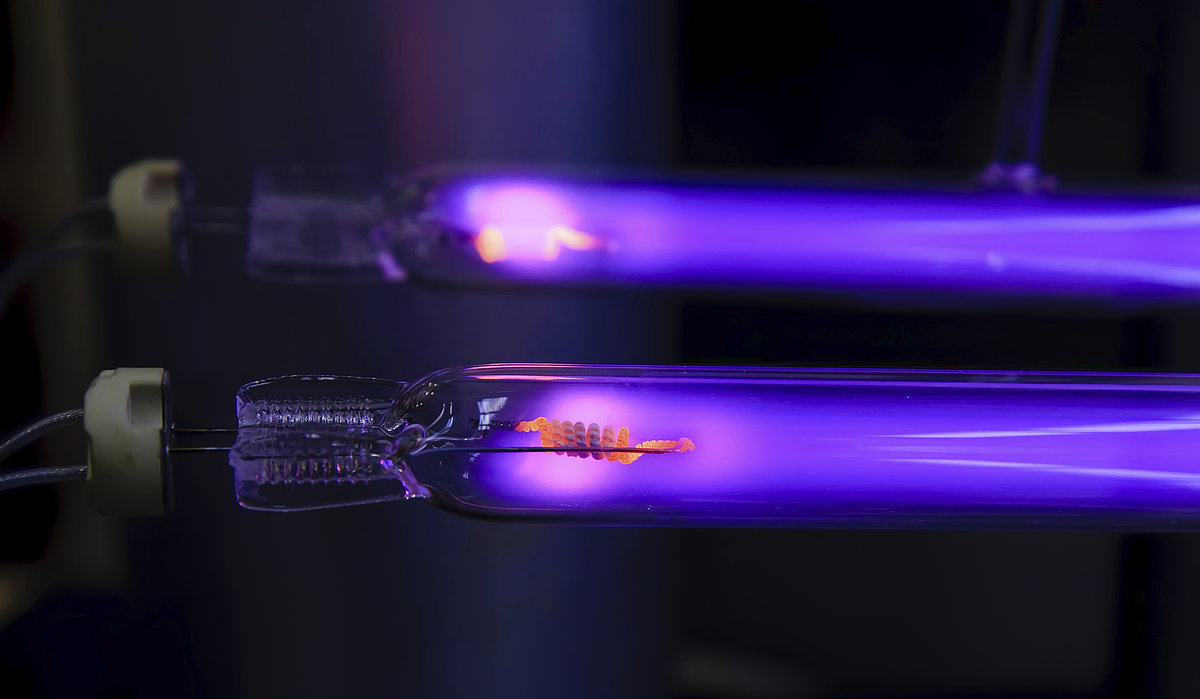
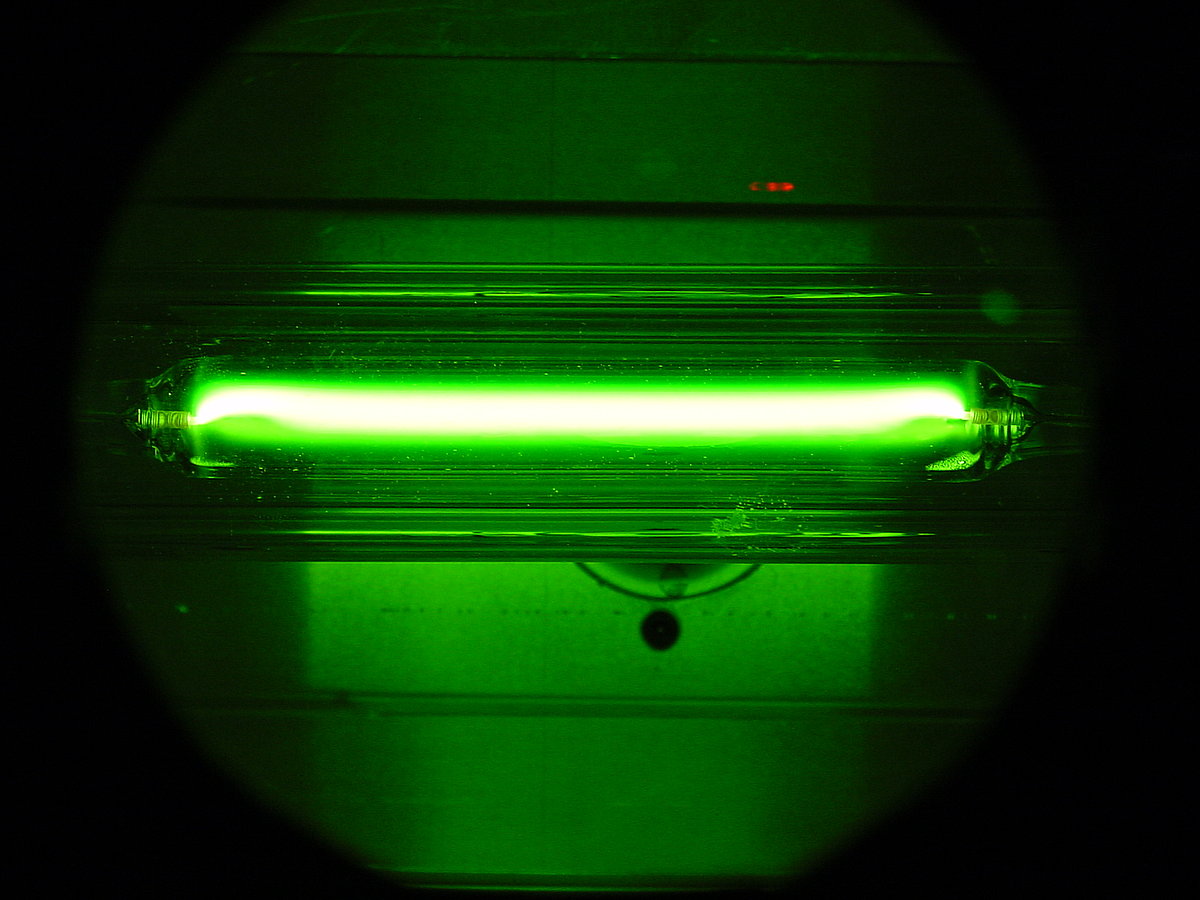
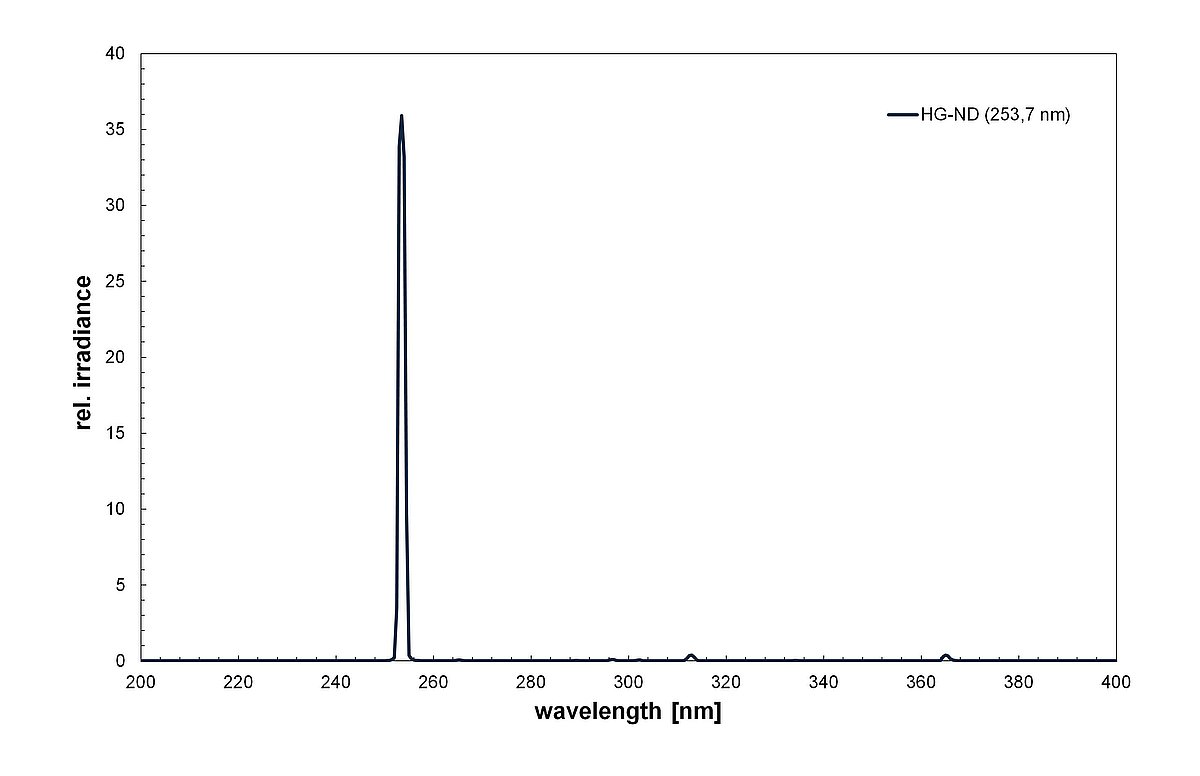
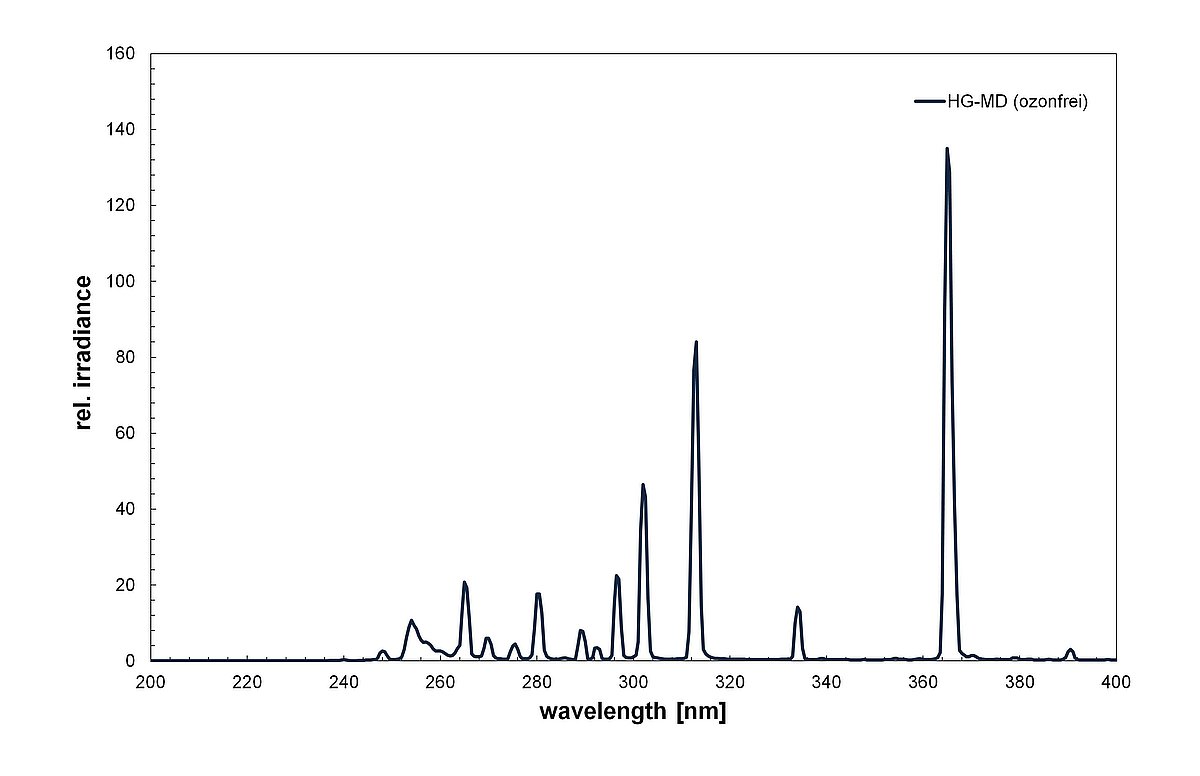
Typical UV spectra in UV drinking water disinfection under DIN 19294
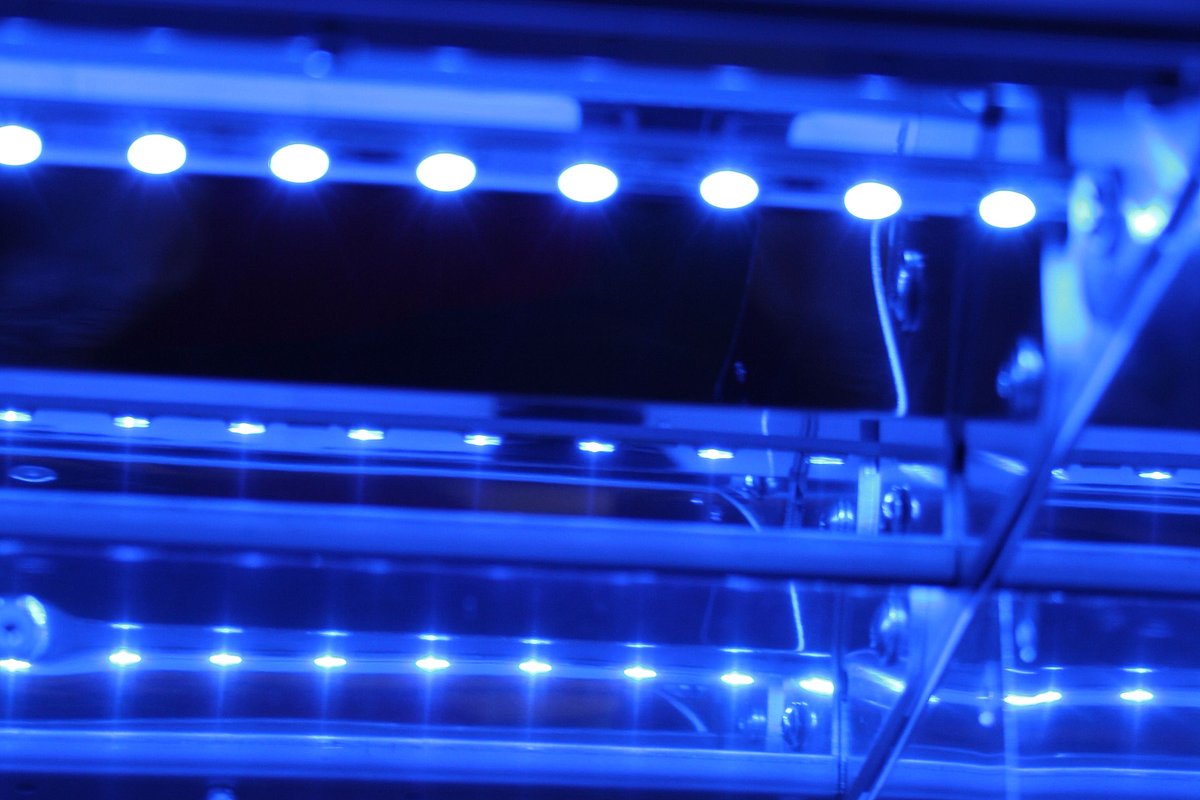
While mercury vapor lamps are a proven technology, UVC LEDs are increasingly becoming an alternative for UV drinking water disinfection due to their mercury-free nature and the latest advances in efficiency and radiation flux. The first pilot systems have already been installed and the latest research results show that the UVC LEDs used are very effective. UVC LEDs use special semiconductors to generate UV radiation.
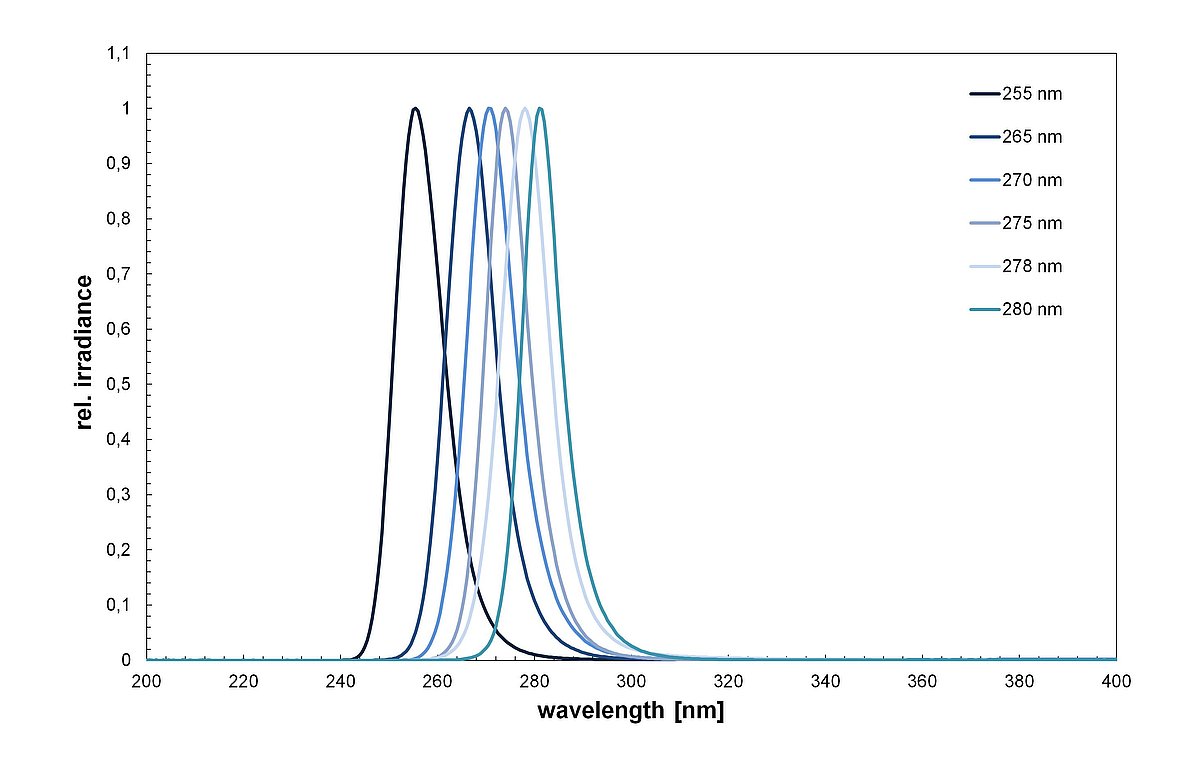
Their emission is narrow-band, with the wavelength and radiation flux depending on the manufacturing process and the resulting binning. UVC LEDs can be precisely controlled. The corresponding test standards are currently being drafted as DIN 19294-5 and DIN 19294-6. Until they are published and included in the German Environment Agency's list of permissible treatment substances and disinfection processes, UV-C LED devices are not approved for public drinking water supply in Germany.
In summary, reference measurement and calibration are becoming increasingly important. Calibration of DVGW sensors is already critical to ensure accurate measurement and control of the UV radiation required for UV disinfection of drinking water.
Only appropriately calibrated sensors and reference radiometers may be used for UV devices with one type of lamp and sensor (same design and same type of calibration lamp).
Regular calibrations in accordance with the standard specifications of DIN 19294-1:2020-08 and DIN 19294-3:2020-08 ensure the accuracy of the sensors, which in turn ensures reliable monitoring and control and thus effective and safe drinking water disinfection.
We can calibrate DVGW sensors to these lamps in our laboratory:
- Low-pressure mercury lamps (253.7 nm)
- Mercury medium-pressure lamps (240 - 290 nm)
- UV LEDs (255, 265, 270, 275, 278 and 280 nm)
To this end, we are accredited as a calibration laboratory for UV sensors and as a testing laboratory for spectrometers, spectroradiometers and light sources in accordance with DIN EN ISO/IEC 17025:2018-03. Our accreditation according to this international standard confirms our competence and reliability in carrying out precise calibrations and tests. We ensure the highest quality standards in the testing and calibration of UV sensors as well as the testing of spectrometers, spectroradiometers and light sources to deliver accurate and trustworthy measurement results.
Downloads
What aperture angle do the DVGW sensors have?
The DVGW sensors for the reference radiometer have an aperture angle of 160°.
Is there also a version with a 40° aperture angle?
No. The 40° version of the DVGW sensors is obsolete and is no longer available.
How often do DVGW reference radiometers need to be calibrated?
We recommend calibration every 12 months.